
Small Kitchen Upgrades That Make Everyday Cooking Easier
Most kitchens don’t need a remodel. They need a few things to work better.
The friction people feel in their kitchen — the hard-to-reach items, the dim lighting, the counter that always feels a little crowded — usually has nothing to do with size or age. It comes down to setup. Light in the wrong place. Things stored where they fit instead of where they’re used. A layout that looks fine but doesn’t quite match how you actually cook anymore.
A remodel changes how a kitchen looks. The right small upgrades change how it feels to use — which is usually what people are actually after.
Your Kitchen Probably Doesn’t Need a Remodel
This is a familiar pattern. Something feels off in the kitchen. The assumption is that something big needs to change — new cabinets, new counters, a full update. Sometimes that happens. Sometimes it doesn’t. Either way, cooking still feels about the same.
The reason is simple: most big upgrades fix what’s visible. They don’t fix how the kitchen actually works. Where things live. How far you reach. Whether the light is actually where you need it.
The changes that make the biggest difference are usually smaller — and easier to overlook. Once they’re fixed, you stop noticing them. That’s the goal.
The Upgrades That Actually Change How Cooking Feels
Not all upgrades matter equally. Some change how the kitchen looks. Some change how it feels to cook in it. This is about the second group.
Does this affect something you do every single time you cook? If yes, it matters. If not, it’s probably optional.
What most people don’t realize is that the upgrades that matter most are often the least visible. They don’t stand out — they just remove friction that’s been there for years.
Start Here — The Three Things That Matter Most
Across designers, professional chefs cooking at home, and real kitchens, the same three areas keep showing up:
These affect every meal. Everything else is secondary.
Lighting — The Most Overlooked Upgrade
This is usually the best place to start — and the one most people skip entirely.
Most kitchens rely on overhead lighting. The problem is that overhead light hits the center of the room — not the counters. When you stand at the counter, you block that light. You end up cooking in your own shadow.
That’s why chopping, reading labels, or checking whether food is done can feel harder than it should. It’s not you. It’s the lighting.
Under-cabinet lighting fixes this directly. It puts light exactly where the work happens. Even a simple plug-in LED strip makes an immediate difference — and it’s one of those upgrades that quietly keeps paying off every single evening.
Color temperature matters as much as brightness. Warm light (around 2700K) feels comfortable, but it makes it harder to see clearly. Daylight bulbs (4000–5000K) make everything sharper — reading recipes, checking doneness, seeing into a cabinet. Swapping bulbs costs almost nothing and takes five minutes.
- Decorative pendant lights — beautiful, but not where function comes from
- Dimmers for mood lighting — fine, just not a cooking upgrade
Storage — Better Placement Beats More Space
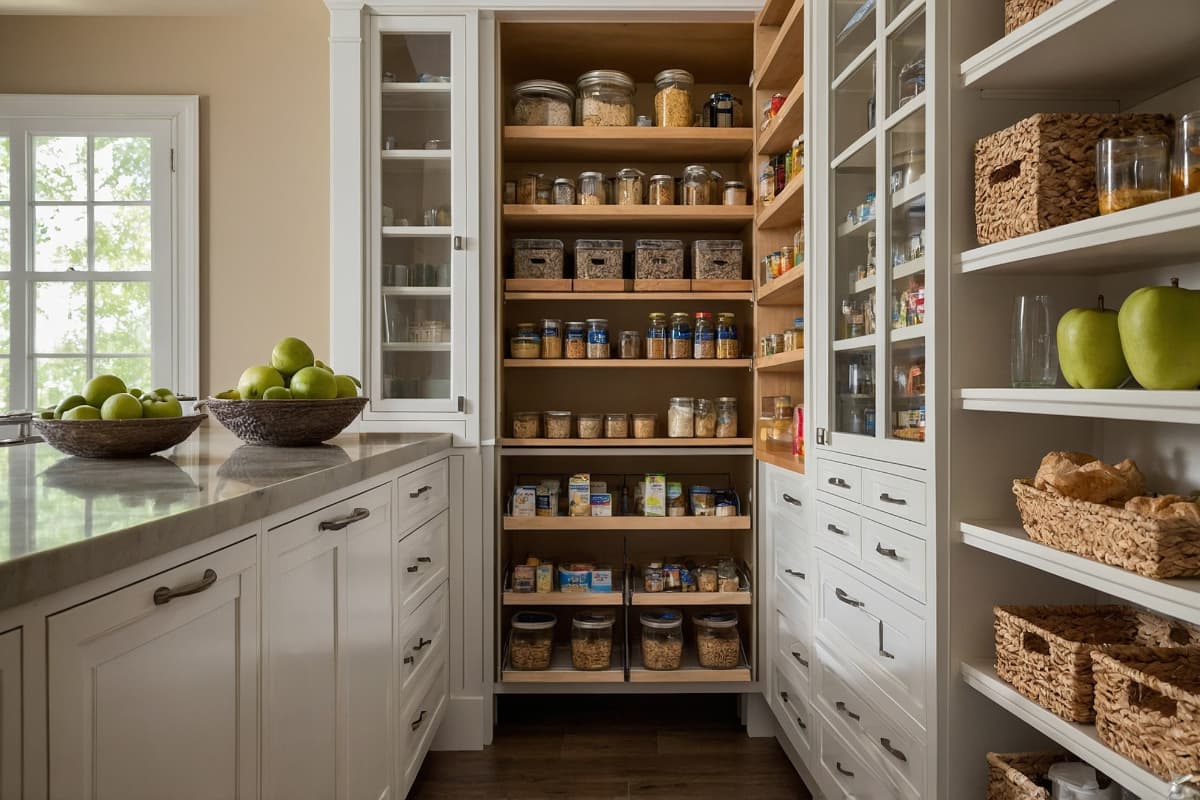
Most storage frustration isn’t about having enough space. It’s about placement. A simple shift changes everything:
Store things where you use them — not where they fit. Spices near the stove. Everyday pans at the front of the cabinet. Frequently used tools within easy reach. This reduces steps, reaching, and unnecessary movement every time you cook.
Lower cabinets are where this matters most. Anything pushed to the back becomes harder to access — and eventually easier to ignore. A pull-out shelf solves that in one move. Everything slides forward. Nothing gets buried.
Counter clutter is usually a signal, not the problem. If something lives on the counter, it often means its home is inconvenient. Fix the storage, and the counter usually fixes itself.
- Adding more storage without changing what goes where
- Buying organizers before knowing what you’re organizing
- Open shelving — looks great in photos, harder to maintain in real kitchens
The Subtle Things That Add Up Every Day
Some of the biggest improvements don’t look like upgrades. They just make things feel easier — every single time.
- The floor under your feet. Standing on hard surfaces for 20 minutes adds up quietly over time. A simple anti-fatigue mat removes most of that strain — zero installation, immediate difference.
- The weight of what you use. If your everyday pan feels heavy, you’ll feel it every time you cook. A lighter pan makes daily cooking noticeably easier. The pan you use every day is worth evaluating before the one you use once a month.
- How far you reach. Keeping daily-use items close to where you cook reduces unnecessary movement without changing your layout at all.
What Most People Upgrade First (And Why It Doesn’t Help Much)
This is where it’s easy to go the wrong direction.
- New countertops: Look great, don’t change how you cook
- Cabinet hardware: Cosmetic only — cooking unaffected
- Backsplashes: Visual upgrade, zero functional impact
- “Do-it-all” appliances: More features usually means more complexity — and less daily use. Simple tools that do one job well get used more.
Pull-down faucets actually improve daily use — rinsing pots, cleaning produce, filling large containers. If you’re planning any renovation work, this one earns its place.
The Honest Truth About Kitchen Organization
Organization isn’t about containers. It’s about decisions.
- Decide what you actually use and how often
- Store it where you use it
- Then organize it
Most people reverse that — they buy the bins, fill them with everything, and wonder why the kitchen still feels chaotic. The chaos was never about the containers.
There’s also a simple truth worth sitting with: having fewer things in your kitchen — fewer gadgets, fewer pots, fewer duplicates — makes organization easier than any product can. The most functional kitchens tend to have less in them, not more.
Where to Start — A Simple Plan
If this feels like a lot, keep it simple.
Then stop. Cook normally and notice what still feels off. That will tell you what to fix next — more reliably than any list can.
The Bottom Line
A kitchen that feels easy to cook in isn’t the newest one. It’s the one that works. Light where you need it. Things where you use them. Less strain while you’re standing, lifting, and moving.
These aren’t big upgrades. They’re the ones that quietly make everyday life better — now and over time.
Your kitchen is the room you use more than any other. It deserves to work for you, not against you. Start with the light.
Explore the Kitchen Cluster
SafeHomeFirst is reader-supported. We may earn a commission at no cost to you if you purchase through our links. We only recommend products we’d confidently use in our own homes.